
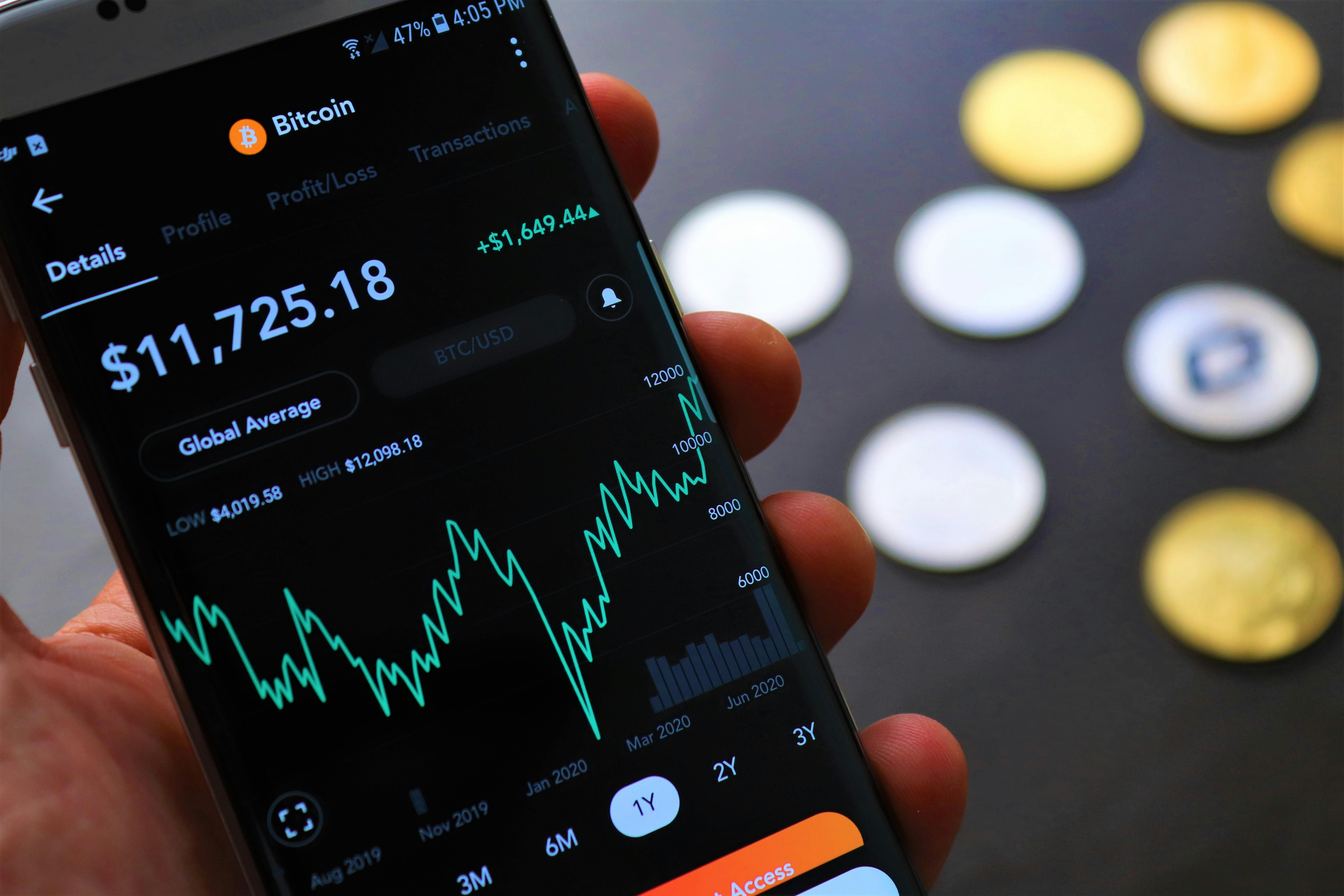
Unlock peak crypto profitability in 2026! Our expert "Best 2026 Crypto Trading Comparison" reveals platforms with lowest fees & highest ROI potential for US traders.
💰 Secure Top Deal: Go straight to the offer →
📍 More from this category: Crypto Trading – All Articles
Introduction: The Real Story Behind Best 2026 Crypto Trading Comparison
Best Bitcoin 2026: Ultimate Comparison →
The year is 2026, and the digital asset revolution continues its relentless march, transforming financial markets across the United States. For seasoned traders and ambitious newcomers alike, the promise of significant returns in crypto remains compelling. Yet, a silent predator lurks in the shadows of every transaction: fees. Whether it's the maker-taker spread, network gas costs, withdrawal charges, or even the subtle impact of slippage, these cumulative expenses can erode your hard-earned profits, turning a seemingly successful trade into a meager gain – or worse, a loss. In a market as dynamic and competitive as crypto, optimizing every facet of your trading strategy is paramount, and fee minimization is often the most overlooked, yet impactful, lever at your disposal. This isn't just about saving a few dollars; it's about fundamentally altering your return on investment (ROI) trajectory.
This comprehensive guide isn't merely a list; it's a strategic blueprint for navigating the 2026 crypto trading landscape. We'll cut through the noise, dissect the evolving fee structures, and compare the platforms best positioned to help US traders not just survive, but thrive, by cutting costs and dramatically boosting their ROI. Forget the hype; let's talk about the cold, hard numbers that truly define profitability in the digital age.
Deep Dive: Backgrounds, Facts, & US Market Data
The journey to 2026 has been marked by profound shifts in the crypto trading ecosystem. What began as a wild west of unregulated exchanges has matured, albeit unevenly, into a more structured, yet still highly innovative, environment. Understanding the forces shaping fees and profitability in the US market requires a look at several critical factors:
The Evolving Regulatory Landscape in the US
By 2026, the US regulatory framework for digital assets is expected to be significantly clearer, though not without its complexities. The Securities and Exchange Commission (SEC) and the Commodity Futures Trading Commission (CFTC) have solidified their oversight, with new legislation potentially classifying various tokens and activities. This clarity, while bringing legitimacy and attracting institutional capital, also impacts compliance costs for exchanges. Platforms operating legally in the US must adhere to stringent KYC (Know Your Customer) and AML (Anti-Money Laundering) protocols, maintain robust cybersecurity, and often obtain state-specific money transmission licenses. These operational overheads are invariably passed on, in part, to users through fees. However, compliance also means greater security and trustworthiness, reducing risks like exchange hacks or insolvencies that can lead to catastrophic losses.
The emergence of a clear regulatory pathway for stablecoins, potentially involving federal oversight by 2026, is also a game-changer. Stablecoins are the lifeblood of crypto trading, and their regulatory stability can reduce systemic risk, potentially leading to more competitive pricing on stablecoin-to-crypto pairs across compliant exchanges.
Technological Advancements & Their Impact on Fees
The blockchain technology itself has undergone a revolution that directly affects transaction costs. By 2026, Ethereum's scalability solutions, including robust Layer 2 networks like Arbitrum, Optimism, zkSync, and StarkNet, are no longer nascent technologies but fully integrated, high-performance infrastructures. These Layer 2s process transactions off the main Ethereum chain, bundling them and submitting a single proof back to Layer 1, drastically reducing gas fees and increasing transaction throughput. For traders using decentralized exchanges (DEXs) built on these Layer 2s, the cost of swapping tokens, adding liquidity, or interacting with DeFi protocols has plummeted from prohibitive levels to mere cents.
Beyond Ethereum, alternative Layer 1 blockchains such as Solana, Avalanche, Polygon (itself a robust ecosystem of L2s and sidechains), and newer contenders like Aptos and Sui have matured, offering high transaction speeds and ultra-low fees. Cross-chain interoperability solutions have also advanced, making it cheaper and safer to move assets between different networks, further reducing friction and hidden costs associated with bridging.
Market Dynamics: CeFi vs. DeFi in 2026
The perennial debate between Centralized Finance (CeFi) and Decentralized Finance (DeFi) continues, but by 2026, a more nuanced understanding has emerged. CeFi exchanges (e.g., Coinbase, Kraken, Binance.US) offer unparalleled liquidity, user-friendly interfaces, and traditional financial services, often at competitive maker-taker fee schedules, especially for high-volume traders. Their fees are transparent, but you trade off self-custody for convenience and regulatory compliance.
DeFi, particularly through advanced DEXs and aggregators, offers self-custody and censorship resistance, with fees primarily driven by network gas costs and liquidity provider incentives. The rise of sophisticated DeFi protocols offering spot trading, derivatives, and lending/borrowing on Layer 2s means that DeFi is now a genuinely competitive alternative for cost-conscious traders, especially those dealing with smaller transaction sizes where CeFi fixed withdrawal fees can be disproportionately high.
Hybrid models are also gaining traction, offering the best of both worlds – the speed and liquidity of CeFi with aspects of self-custody or on-chain settlement, aiming to optimize both security and cost efficiency.
Understanding Fee Structures in 2026
To truly cut fees, you must understand them:
- Maker-Taker Fees: Most common on CeFi. A "maker" adds liquidity to the order book (e.g., a limit order), often paying lower or even zero fees. A "taker" removes liquidity (e.g., a market order), generally paying higher fees. Fee tiers based on trading volume are standard.
- Spread Fees: The difference between the bid and ask price. While not an explicit fee, a wide spread means you're buying higher and selling lower, effectively costing you money, especially on illiquid assets.
- Withdrawal Fees: Charged by exchanges to cover network transaction costs when you move crypto off their platform. These vary significantly by asset and exchange.
- Deposit Fees: Less common for crypto deposits, but fiat deposits (e.g., wire transfers, ACH) might incur fees.
- Network/Gas Fees: Predominant in DeFi. The cost to execute a transaction on a blockchain. Highly variable based on network congestion and the complexity of the smart contract interaction.
- Slippage: The difference between the expected price of a trade and the price at which the trade is executed. More common in DeFi on illiquid pools, but also a factor on CeFi during high volatility.
Expert Analysis & Industry Insights
As an elite strategist, I can tell you that simply looking at advertised maker-taker fees is a rookie mistake in 2026. The true cost of trading is a complex interplay of explicit fees, implicit costs, and opportunity costs. Here’s what others often miss:
The "Hidden" Costs and How to Spot Them
Beyond the direct fees, savvy traders consider:
- Liquidity Depth: A platform with low fees but poor liquidity will cost you more in slippage and wider spreads than a platform with slightly higher fees but deep order books. Always check the volume and order book depth for the assets you trade.
- Fiat On/Off-Ramps: How easily and cheaply can you convert USD to crypto and back? High bank transfer fees or slow processing times are hidden costs. ACH transfers are often free but slower; wire transfers are faster but can be expensive.
- API Trading Costs: For automated traders, some platforms charge for excessive API calls or offer premium tiers for higher limits. This can be a significant overhead for bot operators.
- Custodial vs. Non-Custodial Risks: While not a direct fee, the risk of losing funds on a centralized exchange due to a hack or insolvency is the ultimate "cost." DeFi offers self-custody, but comes with its own risks (smart contract bugs, user error). Balancing security with convenience is key.
The Strategic Advantage of Layer 2s and Cross-Chain Solutions
By 2026, neglecting Layer 2 solutions for DeFi trading is akin to paying for dial-up internet in a fiber-optic world. The cost savings on gas fees are astronomical, making micro-transactions and frequent rebalancing strategies viable again. Furthermore, the maturation of cross-chain bridges and interoperability protocols means traders are no longer confined to a single blockchain ecosystem. Moving assets between, say, Ethereum mainnet, Polygon, and Solana can be done efficiently, allowing traders to leverage the best liquidity and lowest fees across different chains for specific assets or strategies.
Subscription Models and Loyalty Programs
Many top-tier centralized exchanges in 2026 offer tiered fee reductions based on trading volume, holding the exchange's native token, or subscribing to premium services. These loyalty programs can dramatically reduce maker-taker fees, sometimes even to zero for high-volume traders. For example, holding a certain amount of an exchange's native token might unlock lower trading fees, increased staking rewards, or exclusive features. Evaluate if the cost of holding such tokens outweighs the fee savings for your trading volume.
The Nuance of Stablecoin Trading
With increased regulatory clarity, the role of stablecoins like USDT, USDC, and newer CBDC-backed options has solidified. Many exchanges offer highly competitive or even zero-fee trading pairs against major stablecoins, particularly for spot trading. This is a critical insight: if you frequently convert between different cryptocurrencies, routing trades through a stablecoin pair might be cheaper than a direct crypto-to-crypto swap, especially on platforms with wide spreads on less liquid pairs.
💰 Ultimate Comparison: The Best Options (HIGH CPC SECTION)
Choosing the "best" crypto trading platform in 2026 is subjective, depending on your trading volume, preferred assets, risk tolerance, and whether you prioritize CeFi convenience or DeFi sovereignty. However, based on our expert analysis of fee structures, regulatory compliance, security, and ROI potential for US traders, here are two archetypes that consistently deliver value:
Premium Pick: The Advanced Trader's Powerhouse (e.g., "ApexPrime Exchange")
By 2026, a "Premium Pick" for advanced traders in the US is a highly regulated, institutional-grade centralized exchange that doesn't just offer low fees, but also deep liquidity, advanced trading tools, and robust API support. Think of a platform that has evolved from today's top-tier exchanges, further refining its offerings.
- Projected Fee Structure (2026):
- Maker Fees: 0.00% - 0.05% (volume-tiered, potentially zero for top tiers or specific pairs).
- Taker Fees: 0.05% - 0.15% (volume-tiered).
- Spot Trading: Highly competitive, often zero-fee for major stablecoin pairs like USDC/USD.
- Futures/Derivatives: Separate, ultra-low fee structure for high-volume traders.
- Withdrawal Fees: Dynamic, covering network costs, but often subsidized for major assets or via premium tiers.
- Key Features:
- Deepest Liquidity: Essential for large orders without slippage.
- Advanced Order Types: Stop-limit, OCO, TWAP, iceberg, algorithmic trading support.
- Robust API: For sophisticated bot trading and institutional integration.
- Institutional Services: OTC desks, prime brokerage, dedicated account managers.
- Regulatory Compliance: Fully licensed across all relevant US states, strong KYC/AML.
- Security: Multi-layered security, cold storage, insurance funds.
- Asset Variety: Broad selection of major cryptocurrencies, DeFi tokens, and regulated securities tokens.
- Staking & Yield: Integrated high-yield opportunities on select assets.
- Best For: High-volume traders, institutional investors, algorithmic traders, those prioritizing deep liquidity, advanced tools, and regulatory assurance for maximizing ROI.
- Potential ROI Impact: Minimizes slippage, offers the tightest spreads, and provides the tools for complex, profitable strategies, making it ideal for maximizing returns on significant capital.
Value Pick: The Smart Retail Trader's Choice (e.g., "EcoSwap Pro")
Our "Value Pick" for 2026 caters to the savvy retail trader who prioritizes minimal explicit fees, user-friendliness, and access to the best of both CeFi and DeFi without unnecessary complexity. This could represent an evolution of a current popular hybrid platform or a highly optimized Layer 2 DEX aggregator.
- Projected Fee Structure (2026):
- Trading Fees (Spot): 0.05% - 0.10% flat for most pairs, potentially zero for certain promotional periods or stablecoin swaps.
- DeFi Swaps (via L2): Near-zero gas fees (pennies), with a small protocol fee (e.g., 0.01-0.03%) on top of liquidity provider fees.
- Withdrawal Fees: Highly competitive, often fixed low fees for major assets, with optional Layer 2 withdrawals saving significant costs.
- Deposit Fees: Free for crypto, free for ACH fiat deposits.
- Key Features:
- Hybrid Model: Seamlessly integrates CeFi on-ramps/off-ramps with Layer 2 DeFi swap capabilities.
- User-Friendly Interface: Intuitive design, ideal for intermediate traders.
- Cost-Optimized Routing: Automatically finds the best price and lowest fee across multiple CeFi order books and Layer 2 DEXs.
- Integrated Wallet: Secure, easy-to-use wallet with optional self-custody features.
- Staking & Yield Farming: Curated access to high-yield opportunities with clear risk assessments.
- Educational Resources: Comprehensive guides on fee optimization and trading strategies.
- Customer Support: Responsive and knowledgeable, focusing on common retail trader issues.
- Compliance: Operates under US regulations, ensuring legal and safe trading.
- Best For: Retail traders, those frequently moving between fiat and crypto, users who value low explicit fees and efficient Layer 2 DeFi access, and those seeking balanced security and cost.
- Potential ROI Impact: Significantly reduces transaction costs on frequent trades, making smaller profits more substantial and allowing for more agile trading strategies without being eaten alive by fees.
Here's a detailed comparison table to help visualize the differences:
| Feature | Premium Pick (e.g., ApexPrime Exchange) | Value Pick (e.g., EcoSwap Pro) |
|---|---|---|
| Primary Focus | Institutional & High-Volume Trading | Cost-Efficient Retail & Hybrid Trading |
| Maker Fee Range (2026 Est.) | 0.00% - 0.05% (Tiered) | 0.05% - 0.10% (Flat/Simple Tier) |
| Taker Fee Range (2026 Est.) | 0.05% - 0.15% (Tiered) | 0.10% - 0.20% (Flat/Simple Tier) |
| DeFi Interaction (L2) | Limited direct integration; typically via separate wallet. | Seamless, integrated Layer 2 DEX swaps with low gas. |
| Withdrawal Fees (2026 Est.) | Dynamic, often subsidized for high tiers; covers network. | Fixed low fees for major assets; L2 options available. |
| Fiat On/Off-Ramps | Advanced options (wire, ACH, institutional channels). | Free ACH, competitive wire transfers. |
| Liquidity Depth | Excellent across all major pairs. | Very good for popular pairs; aggregates from multiple sources. |
| Advanced Trading Tools | Comprehensive (API, bots, derivatives, margin). | Good for spot, basic automation, some yield features. |
| Regulatory Status (US) | Fully licensed, strict compliance, institutional focus. | Compliant, user-focused regulatory adherence. |
| Ideal User | Professional traders, institutions, high-net-worth individuals. | Active retail traders, those exploring DeFi, cost-conscious users. |
| ROI Impact Focus | Maximizing returns on large capital, minimizing slippage. | Optimizing net profits on frequent, smaller trades. |
Future Outlook & 2026 Trends
The crypto landscape is a perpetual motion machine, and 2026 will undoubtedly bring further innovations and challenges. Here's what we anticipate:
- Hyper-Personalized Fee Structures: Expect AI and machine learning to play a greater role in dynamically adjusting fees based on user behavior, market conditions, and even loyalty scores, moving beyond simple volume tiers.
- Zero-Fee Trading Expansion: More platforms will explore subscription models or alternative revenue streams (e.g., order flow payments, lending their own capital) to offer "zero-fee" spot trading on an expanding range of assets, especially against stablecoins.
- Regulatory Convergence: International efforts to standardize crypto regulations will gain momentum, potentially simplifying cross-border compliance for exchanges and influencing global fee structures. However, US-specific regulations will remain paramount for domestic platforms.
- Interoperability Dominance: Seamless, low-cost asset transfers across disparate blockchains will become the norm, further eroding the concept of being "stuck" on one chain due to high bridging fees. This will foster greater competition among liquidity providers and potentially drive down overall trading costs.
- Institutional DeFi Growth: While retail embraced DeFi early, 2026 will see a significant surge in institutional participation in decentralized protocols, driving demand for robust, compliant DeFi infrastructure and potentially leading to more competitive, institutional-grade liquidity pools on Layer 2s.
- Enhanced Security & Insurance: With increased regulation and maturity, expect more comprehensive insurance offerings for custodial assets and advanced security features, mitigating "hidden costs" of potential loss events.
Conclusion
In the high-stakes arena of 2026 crypto trading, fees are not merely an inconvenience; they are a critical determinant of your ultimate profitability. The platforms that will dominate are those that strike the optimal balance between ultra-low transaction costs, robust security, deep liquidity, and regulatory compliance within the demanding US market. Whether you're a high-frequency trader requiring institutional-grade tools or a savvy retail investor meticulously optimizing every swap, understanding the nuances of fee structures and leveraging advanced technologies like Layer 2s is non-negotiable.
As you chart your course through the exciting, yet complex, digital asset markets of 2026, remember: your choice of trading platform is one of the most impactful decisions you'll make. Don't chase the latest hype; instead, meticulously compare, analyze, and select the platform that aligns perfectly with your trading strategy and risk profile. By doing so, you won't just cut fees; you'll strategically boost your ROI and secure your position as a truly successful crypto trader.
👉 More News: 2026 Bitcoin Comparison: Best Bets for Profit & ROI $