
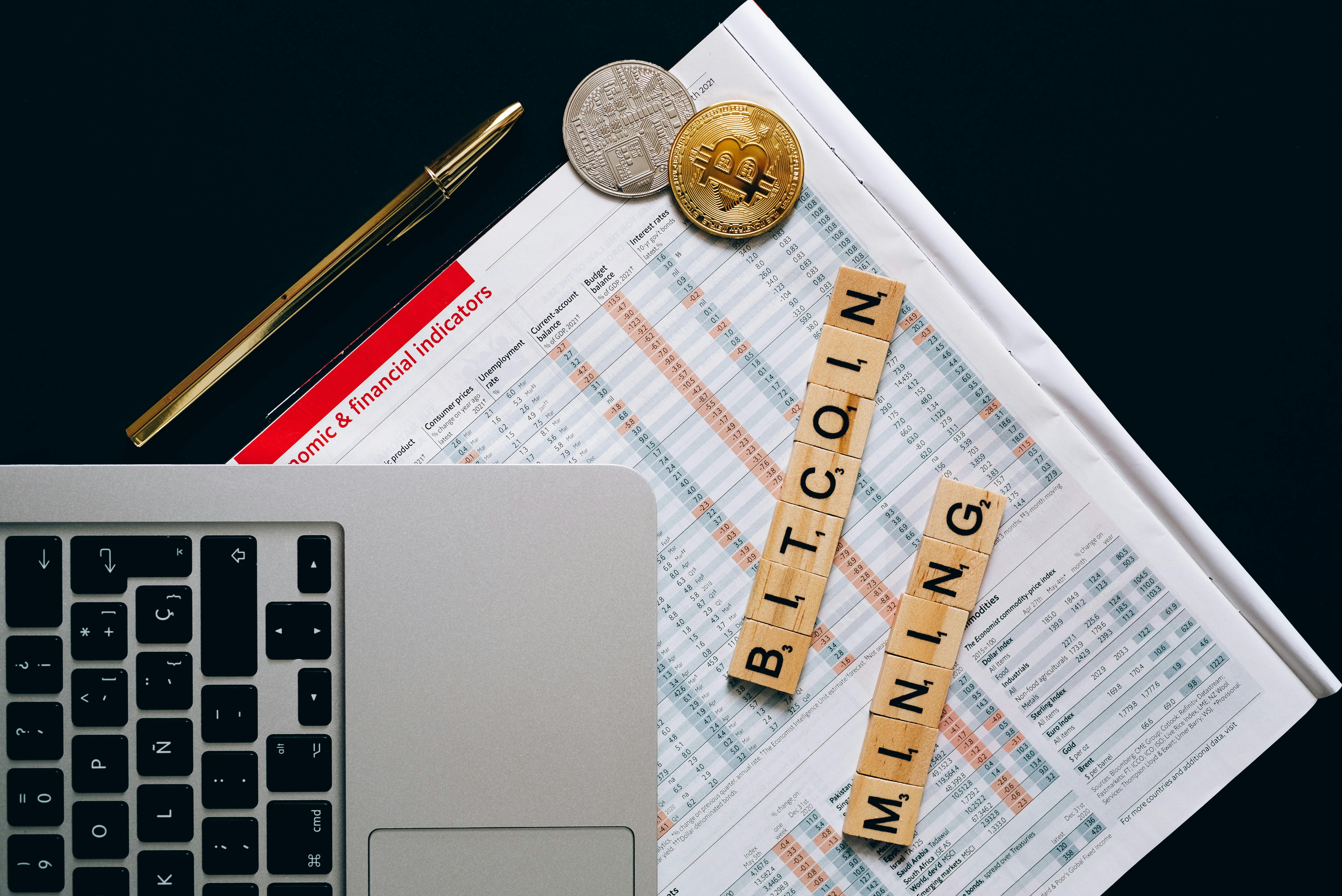
Unlock top 2026 US Mining & Staking Deals to beat inflation and maximize ROI. Expert insights on crypto investment strategies, regulations, and passive income for US investors.
💰 Secure Top Deal: Go straight to the offer →
📍 More from this category: Mining & Staking – All Articles
Introduction: The Real Story Behind 2026 US Mining & Staking Deals
Best Altcoins 2026: Ultimate Comparison →
As we navigate the mid-2020s, the specter of inflation continues to cast a long shadow over traditional investment portfolios. American investors, increasingly savvy and seeking genuine hedges against the erosion of their purchasing power, are turning their gaze towards innovative frontiers. Forget the fleeting hype cycles; by 2026, the digital asset landscape has matured significantly, presenting robust, albeit nuanced, opportunities for those willing to understand its intricacies. Specifically, US-based crypto mining and staking deals have evolved from niche pursuits into sophisticated financial instruments capable of delivering substantial returns and acting as potent inflation countermeasures.
This isn't about chasing pump-and-dump schemes. This is about strategic capital deployment into the foundational infrastructure of the future economy. For the discerning US investor, 2026 offers a unique confluence of technological advancement, regulatory clarity (or at least, increased predictability), and market maturity, making it an opportune moment to explore the deep value within mining and staking. Our mission at GO CRYPTO TRENDS is to cut through the noise, providing you with the authoritative insights and actionable strategies to identify the premier 2026 US mining & staking deals designed to beat inflation and truly maximize your return on investment.
Deep Dive: Backgrounds, Facts, & US Market Data
By 2026, the United States has solidified its position as a global leader in the digital asset space, driven by a combination of innovation, evolving regulatory frameworks, and a growing appetite from both institutional and retail investors. The economic backdrop remains critical: persistent inflationary pressures, spurred by supply chain realignments, geopolitical shifts, and ongoing fiscal policies, continue to challenge the long-term value of the dollar. This economic reality makes assets that demonstrate scarcity, utility, and a strong growth trajectory particularly attractive.
The Maturation of US Crypto Mining
The US crypto mining sector, particularly for Bitcoin (Proof-of-Work), has undergone a significant transformation. Following the 2021 global mining shifts, states like Texas, Kentucky, Georgia, and Wyoming emerged as powerhouses, leveraging abundant energy resources and favorable regulatory environments. By 2026, the industry is characterized by:
- Energy Efficiency & Renewables: The vast majority of competitive US mining operations now prioritize sustainable energy sources. Deals frequently highlight a significant percentage of renewable energy (solar, wind, hydro, flared gas capture), not just for environmental stewardship but for cost stability and regulatory compliance. This focus has attracted ESG-conscious institutional capital.
- Industrial Scale & Professionalization: Gone are the days of garage mining rigs dominating the landscape. 2026 sees highly professionalized, industrial-scale data centers optimized for uptime, cooling, and hardware maintenance. Mining deals often involve co-location services or direct investment into large-scale, managed facilities.
- Advanced ASIC Technology: The hardware has continued to advance, with ASICs (Application-Specific Integrated Circuits) becoming even more efficient. However, the capital expenditure remains substantial. Deals often revolve around purchasing blocks of the latest-generation ASICs or securing contracts with providers who manage hardware upgrades.
- Regulatory Framework: While a comprehensive federal framework is still evolving, specific states have implemented clearer guidelines for digital asset mining, providing a more predictable operating environment. This reduces regulatory risk for investors compared to previous years.
The Evolution of US Crypto Staking
Staking, particularly for Proof-of-Stake (PoS) networks like Ethereum, has become a cornerstone of passive income generation in the crypto space. By 2026, the staking landscape in the US is marked by:
- Ethereum's Dominance & Beyond: With Ethereum’s transition to PoS long complete and its ecosystem robust, it remains the primary staking asset. However, a growing number of other high-cap PoS blockchains (Solana, Cardano, Polkadot, Avalanche, etc.) offer diverse staking opportunities, each with unique risk-reward profiles.
- Liquid Staking Protocols: A significant innovation, liquid staking (e.g., via protocols like Lido, Rocket Pool, or their 2026 equivalents) has become mainstream. This allows users to stake their assets while receiving a liquid token (e.g., stETH) that can be used in other DeFi protocols, thereby enhancing capital efficiency and potential yields. This is a game-changer for maximizing ROI.
- Institutional Staking Services: Major custodians, exchanges, and specialized staking-as-a-service providers offer robust, compliant staking solutions for both retail and institutional clients. These services often handle the technical complexities, security, and validator node management, simplifying the process for investors.
- Regulatory Scrutiny & Clarity: The SEC and other US regulators have provided more guidance on staking services, particularly those offered by centralized entities. While some services might face stricter oversight, this also brings a level of legitimacy and reduces uncertainty for compliant platforms, making them more attractive for risk-averse US investors.
The convergence of these trends creates a dynamic environment. US investors in 2026 aren't just looking for "crypto"; they're seeking structured, compliant, and high-yield opportunities within the digital asset economy to safeguard and grow their wealth against inflationary pressures.
Expert Analysis & Industry Insights
As elite strategists at GO CRYPTO TRENDS, we recognize that superficial analysis misses the crucial details that separate merely participating from truly excelling. In 2026, success in US mining and staking deals hinges on understanding the underlying economics, regulatory nuances, and technological shifts.
The Inflation Hedge Imperative
Digital assets, particularly Bitcoin, are increasingly viewed as a viable inflation hedge, akin to digital gold, due to their finite supply and decentralized nature. Staking and mining amplify this by not only offering exposure to these appreciating assets but also generating *more* of them. When inflation erodes the value of fiat currency, the strategic acquisition and generation of scarce digital assets can preserve and even grow purchasing power. This is the core thesis behind why 2026 US mining & staking deals are so compelling: they offer a dual benefit of asset appreciation and continuous yield generation.
Balancing Risk and Reward: The US Regulatory Compass
One of the most significant shifts by 2026 is the growing, albeit imperfect, regulatory clarity in the US. This presents both challenges and opportunities. While some services may be restricted or face higher compliance costs, regulated platforms offer significantly reduced counterparty risk and increased investor protection. Our analysis suggests that focusing on deals offered by entities that demonstrably comply with US financial regulations (e.g., KYC/AML, state-level licenses for money transmission or digital asset businesses) will be paramount for long-term success and peace of mind for US investors. The nuanced distinction between a "security" and a "commodity" in the eyes of US regulators profoundly impacts the legal standing of various staking and mining arrangements.
Technological Edge: The ROI Multiplier
For mining, the efficiency equation is everything. By 2026, energy consumption per terahash has been optimized, but electricity costs in the US remain a variable. Deals that leverage:
- Low-Cost Renewable Energy: Directly tied to solar, wind farms, or natural gas flare mitigation projects offer superior margins and future-proof operations.
- Advanced Cooling Systems: Immersion cooling and other innovative techniques enhance hardware longevity and performance.
- Scalable Infrastructure: The ability to expand operations efficiently is a strong indicator of a long-term viable mining partner.
For staking, the technological edge comes from:
- Uptime & Performance of Validators: Higher uptime means more rewards. Reputable staking providers boast near-perfect validator performance.
- Smart Contract Security: For liquid staking or DeFi yield farming, audited and battle-tested smart contracts are non-negotiable to prevent exploits.
- Integration with DeFi Ecosystems: The ability to leverage staked assets (e.g., liquid staking derivatives) across various DeFi protocols can significantly boost overall ROI, but also introduces additional layers of risk.
The true "deal" in 2026 isn't just about the advertised APY or hash rate; it's about the robust, compliant, and technologically superior infrastructure underpinning those numbers. US investors must look beyond the headline figures and scrutinize the operational backbone.
💰 Ultimate Comparison: The Best Options (HIGH CPC SECTION)
To truly beat inflation and maximize ROI in 2026, US investors need to understand the distinct advantages and considerations for different types of mining and staking deals. This section provides a strategic comparison, focusing on high-value commercial content designed for those ready to act.
Premium Pick: Institutional-Grade Renewable Energy Mining Hosting
This option is tailored for sophisticated investors or family offices looking for substantial, long-term exposure to Bitcoin mining with robust risk management and sustainability credentials.
- Target Investor: High-net-worth individuals, institutional investors, or large-scale private equity.
- Key Features:
- Direct ASIC Ownership & Hosting: You own the latest-generation ASIC miners, hosted in a state-of-the-art, secure US facility.
- Renewable Energy PPA: Guarantees a significant percentage (often 70%+) of power from renewable sources, leading to stable, competitive electricity rates and strong ESG compliance.
- Full Management & Maintenance: Providers handle all aspects, from installation and monitoring to repairs and upgrades, ensuring maximum uptime.
- Transparency & Reporting: Detailed daily/weekly reports on hash rate, uptime, and Bitcoin rewards.
- US Regulatory Compliance: Operations are typically structured to comply with federal and state regulations, offering a higher degree of legal certainty.
- Pros: High potential ROI, direct exposure to Bitcoin production, professional management, reduced operational hassle, strong inflation hedge, competitive energy costs, appealing ESG profile.
- Cons: High upfront capital investment, illiquidity of physical ASICs, market price volatility of Bitcoin, dependence on host provider's operational excellence.
- Maximizing ROI: Focus on providers with proven track records, strong energy purchase agreements (PPAs), and clear exit strategies for hardware. Consider tax implications for depreciation.
Value Pick: Regulated Liquid Staking & Diversified PoS Pools
This option is ideal for retail and mid-tier investors seeking passive income and capital efficiency without the complexities of direct mining or validator node operation, emphasizing accessibility and security within the US regulatory framework.
- Target Investor: Retail investors, those seeking passive income, DeFi participants, or those with smaller capital allocations.
- Key Features:
- Liquid Staking Protocols: Stake your ETH (or other PoS assets) and receive a liquid derivative token (e.g., stETH, rETH). This token can then be used in other DeFi applications (lending, borrowing, yield farming) to compound returns.
- Diversified PoS Pools: Access to a range of staking pools across multiple high-cap PoS blockchains (e.g., Solana, Avalanche, Polygon) through a single, compliant platform.
- User-Friendly Interface: Platforms designed for ease of use, often integrated with popular wallets and offering clear APY projections.
- US-Compliant Platforms: Prioritize platforms that clearly state their adherence to US regulations, including KYC/AML and any necessary state licenses.
- Non-Custodial or Institutional Custody Options: Choice between protocols where you retain control of keys (non-custodial liquid staking) or using regulated custodians for added security.
- Pros: Lower entry barrier, capital efficiency (liquid staking), diversification across PoS assets, passive income, potential for compounding yields, enhanced security via regulated platforms.
- Cons: Smart contract risk (for liquid staking), potential for slashing penalties (managed by reputable providers), market price volatility of staked assets, regulatory uncertainty for certain DeFi integrations.
- Maximizing ROI: Research smart contract audits for liquid staking protocols. Diversify across different PoS assets and platforms. Understand the tax implications of staking rewards and DeFi activities.
Comparative Analysis Table for 2026 US Mining & Staking Deals
| Deal Type | Target Investor | Min. Investment (Est. 2026) | Est. ROI (2026 Avg.) | Key Features | Primary Risks | US Regulatory Status (Est.) |
|---|---|---|---|---|---|---|
| Renewable Energy Mining Hosting | HNW, Institutional | $25,000 - $100,000+ | 20% - 45% APY (BTC equivalent) | Direct ASIC ownership, managed hosting, renewable power, high uptime, transparent reporting. | High CapEx, BTC price volatility, hardware obsolescence, operational dependency. | Increasingly clear for compliant, large-scale operations. |
| Regulated Liquid Staking | Retail, Mid-tier | $500 - $10,000+ | 5% - 15% APY (ETH equivalent) | Liquid staking tokens, DeFi integration, non-custodial options, smart contract audited. | Smart contract risk, ETH price volatility, slashing risk (mitigated by providers). | Evolving clarity, particularly for centralized providers. |
| Diversified PoS Staking Pools | Retail, New Investors | $100 - $5,000+ | 4% - 20% APY (varies by asset) | Access to multiple PoS assets, user-friendly platforms, typically KYC/AML compliant. | Asset price volatility, platform specific risks, network slashing events. | Generally well-defined for centralized platforms. |
Note: Estimated ROI figures are illustrative and subject to significant market fluctuations, network difficulty, and operational costs in 2026. Always conduct your own due diligence.
Future Outlook & 2026 Trends
The landscape of US mining and staking is dynamic, and several key trends are set to define its trajectory beyond 2026:
- Continued Institutionalization and Mainstream Adoption: Expect more traditional financial players, including banks and asset managers, to offer regulated crypto investment products, including structured mining and staking funds. This will further legitimize the space and attract a broader investor base.
- Enhanced Regulatory Clarity: While a perfect federal framework might still be elusive, 2026 will likely see more precise guidelines from the SEC, CFTC, and IRS regarding the classification and taxation of various digital assets and services. This predictability will foster innovation and attract more compliant capital.
- Energy Innovation in Mining: The drive for sustainable and cost-effective energy will intensify. We anticipate further integration of renewable energy sources, waste heat utilization, and even modular, mobile mining units that can deploy to capture stranded energy. This makes US mining highly competitive globally.
- DeFi-CeFi Convergence: The lines between decentralized finance (DeFi) and centralized finance (CeFi) will blur further. Regulated entities will increasingly offer access to DeFi yields (including advanced staking strategies) through compliant interfaces, bridging the gap for risk-averse investors.
- Tokenization of Real-World Assets (RWAs): As RWAs become tokenized on blockchain networks, the utility of staking and mining might expand to secure these new asset classes, opening up novel investment avenues.
- Emergence of New Consensus Mechanisms: While PoW and PoS dominate, research into alternative, more efficient consensus mechanisms will continue, potentially introducing new ways to secure networks and earn rewards in the distant future.
For US investors, these trends signal a future where digital asset investments become more integrated into conventional financial planning, offering diversified avenues to combat inflation and build long-term wealth.
Conclusion
In 2026, the quest for financial sovereignty and inflation-beating returns leads many savvy US investors to the robust opportunities within crypto mining and staking. These are no longer speculative gambles but strategic components of a diversified portfolio, capable of generating significant passive income and capital appreciation. The key to unlocking their full potential lies in meticulous due diligence, a deep understanding of the evolving US regulatory landscape, and a commitment to partnering with reputable, technologically advanced providers.
Whether you opt for the industrial-scale efficiency of renewable energy-backed mining hosting or the capital-efficient flexibility of regulated liquid staking, the pathway to maximizing your ROI and protecting your wealth against inflation is clearer than ever. As the digital economy continues its relentless expansion, securing your stake in its foundational infrastructure is not just an investment strategy – it's a declaration of financial foresight. Equip yourself with knowledge, choose your deals wisely, and position your portfolio for unparalleled growth in the dynamic landscape of 2026.
👉 More News: 2026 Bitcoin Comparison: Best Bets for Profit & ROI $