
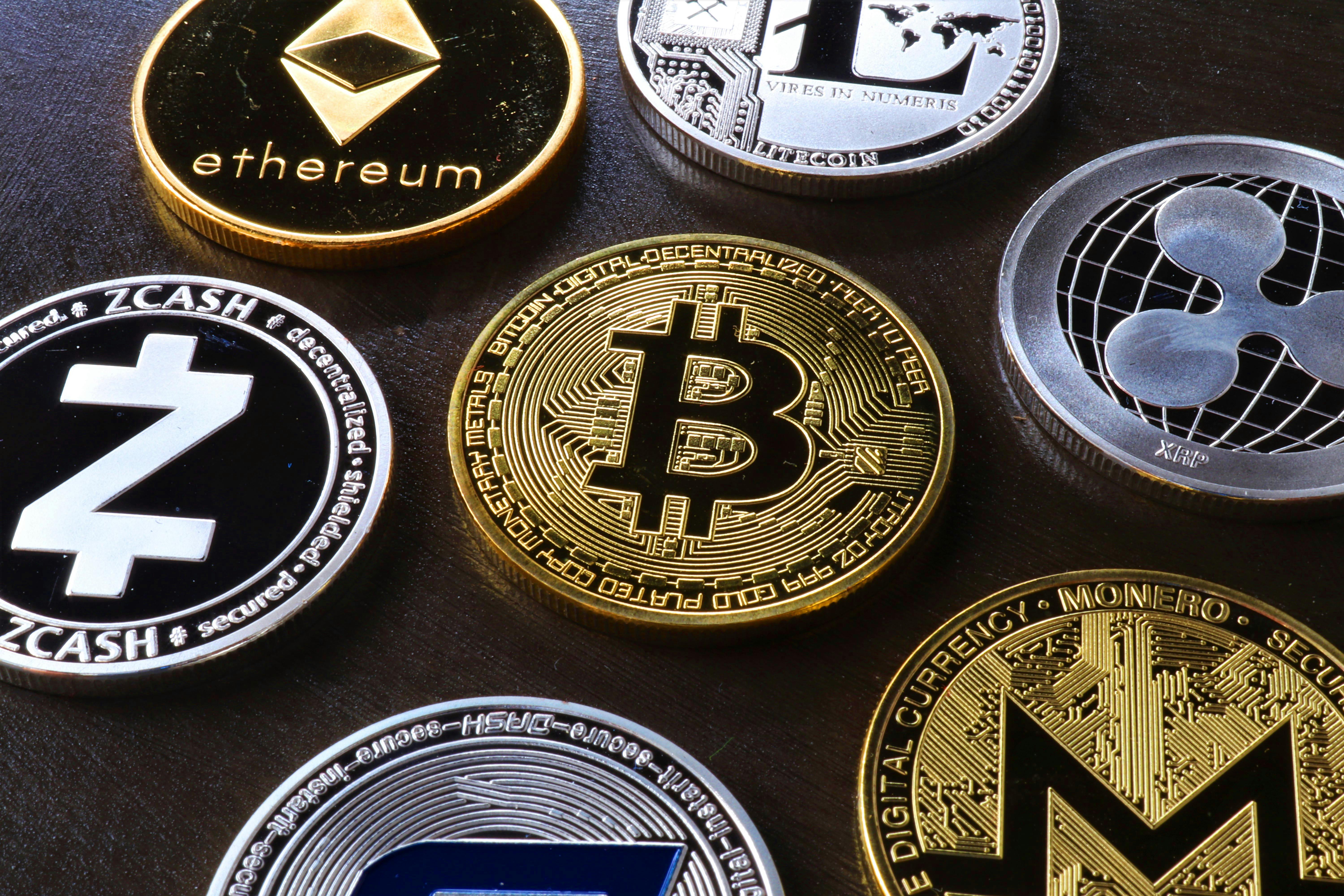
In 2026, the NFT revolution has matured beyond digital art. Discover how Real-World Asset (RWA) tokenization, powered by NFTs, is democratizing access to illiquid assets like real estate, fine art, and private equity. Learn which platforms are leading the charge and how to invest in this multi-trillion-dollar market for unprecedented returns and unparalleled liquidity.
Introduction to the Topic
Welcome to 2026, where the digital frontier of finance has dramatically expanded. Remember the speculative frenzy of 2021-2022, when NFTs were primarily known for their artistic and collectible value? That era was merely the overture. Today, NFTs have evolved into sophisticated digital instruments, acting as the bedrock for a financial revolution: Real-World Asset (RWA) tokenization. This isn't just about owning a digital image; it's about owning a verifiable, fractionalized piece of a skyscraper, a rare vintage wine collection, or even a renewable energy project, all secured and managed on the blockchain.
The promise of RWA tokenization is profound: to unlock trillions of dollars in illiquid assets, making them accessible, transparent, and tradable globally, 24/7. For investors, this means unprecedented access to asset classes previously reserved for institutions or the ultra-wealthy. For asset owners, it means enhanced liquidity and new capital formation opportunities. gocryptotrends.com is here to guide you through this transformative landscape, highlighting the key players, the immense opportunities, and how you can position your portfolio for the next wave of digital wealth creation.
Backgrounds & Facts
Real-World Asset tokenization is the process of creating a digital representation (a token) of a tangible or intangible asset on a blockchain. While fungible tokens (like stablecoins or security tokens) can represent homogeneous assets, NFTs (Non-Fungible Tokens) are uniquely suited for representing distinct, indivisible assets due to their inherent uniqueness and provable scarcity. An NFT can be the digital deed to a property, a certificate of ownership for a piece of art, or a share in a private equity fund.
The journey from speculative art NFTs to utility-driven RWA NFTs has been rapid. Early experiments in real estate tokenization began before 2020, but the technological advancements and regulatory clarity emerging by 2026 have truly catalyzed this sector. According to a recent report by Boston Consulting Group, the market for tokenized illiquid assets could reach an astounding $16 trillion by 2030. Even by 2026, analysts at major financial institutions estimate the market capitalization of tokenized RWAs has already surpassed $500 billion, with projections pointing towards $1-2 trillion within the next two years.
The benefits are manifold: Fractionalization allows multiple investors to own a portion of a high-value asset, lowering entry barriers. Liquidity is dramatically increased as tokenized assets can be traded on secondary markets around the clock. Transparency and Auditability are enhanced through immutable blockchain records. Lower Costs are achieved by disintermediating traditional financial gatekeepers. Moreover, the global nature of blockchain technology means these assets can be accessed by investors worldwide, fostering unprecedented market depth.
While the opportunities are vast, the regulatory landscape remains a critical factor. By 2026, jurisdictions like the European Union (with MiCA and DLT Pilot Regime), the UK (with its evolving digital asset framework), and various states in the US are providing clearer, albeit complex, guidelines. These frameworks are crucial for institutional adoption, ensuring investor protection, and establishing legal enforceability of tokenized ownership. The industry is also seeing significant advancements in legal wrappers, ensuring that the on-chain token legally represents the off-chain asset, often through special purpose vehicles (SPVs) or trust agreements.
Expert Opinion / Analysis
“The speculative frenzy of 2021-2022 was merely a proof-of-concept for blockchain’s ability to confer ownership and scarcity,” states Dr. Anya Sharma, Head of Digital Asset Strategy at Nexus Capital Group. “By 2026, NFTs are no longer just digital art; they are the digital deeds, the verifiable contracts, and the immutable records that underpin a new era of global finance. The focus has decisively shifted from ‘what does it look like?’ to ‘what does it *do*?’ and more importantly, ‘what *value* does it unlock?’”
Dr. Sharma emphasizes that technological advancements have been pivotal. “We’ve moved beyond basic smart contracts. Today, we’re seeing sophisticated hybrid solutions that combine on-chain transparency with off-chain legal enforceability. Zero-Knowledge Proofs (ZK-proofs) are increasingly being deployed to ensure privacy in sensitive RWA transactions, allowing verification without revealing underlying data. Cross-chain interoperability protocols are maturing, enabling seamless transfer of tokenized assets across different blockchain ecosystems like Ethereum, Solana, and Avalanche, further enhancing liquidity and market reach.”
She also highlights the accelerating institutional adoption. “Traditional finance players aren't just observing; they are actively building the infrastructure. Major banks, asset managers, and even sovereign wealth funds are launching dedicated digital asset divisions, exploring tokenized bonds, private credit, and real estate funds. This institutional wave is bringing much-needed capital, regulatory expertise, and market depth, transforming RWA tokenization from a niche crypto trend into a mainstream financial innovation.”
The challenges, Dr. Sharma notes, still revolve around regulatory harmonization and oracle reliability. “While progress has been made, global regulatory clarity is still a patchwork. Furthermore, the reliance on reliable oracles to bring real-world data (like property valuations, commodity prices, or rental income) onto the blockchain remains a critical area of development. However, the solutions emerging are increasingly robust, leveraging decentralized oracle networks and AI-powered data validation to mitigate risks.”
💰 Best Options in Comparison (VERY IMPORTANT)
For investors looking to capitalize on the RWA tokenization boom, 2026 offers a diverse array of platforms and approaches. It's crucial to understand the nuances of each to align with your investment goals, risk tolerance, and desired asset exposure. Here, we compare some of the leading categories and platforms that are defining the RWA investment landscape:
- RealtyBlock: The Future of Property Ownership
RealtyBlock is a leading platform specializing in fractionalized real estate ownership. By tokenizing commercial and residential properties, it allows investors to own a piece of high-value assets with significantly lower capital requirements. Tokens represent a direct share in the property, entitling holders to rental income and appreciation. - ArtChain: Democratizing Elite Collectibles
ArtChain focuses on the tokenization of luxury goods, fine art, rare wines, and high-end collectibles. It provides authenticity verification through advanced provenance tracking and allows fractional ownership, making these exclusive assets accessible to a broader investor base. Investors can gain exposure to market appreciation and, in some cases, even participate in exhibition rights or exclusive events. - CapitaLink: Bridging Private Equity to Blockchain
CapitaLink is an institutional-grade platform designed for tokenizing private equity funds, venture capital investments, and private credit instruments. It caters to accredited investors seeking exposure to alternative alpha sources, offering enhanced liquidity for traditionally illiquid investments through a regulated secondary market. - InfraToken: Sustainable Investments, Tokenized
InfraToken specializes in tokenizing infrastructure projects, particularly in the renewable energy sector. Investors can acquire revenue-share tokens from solar farms, wind parks, or sustainable urban development projects. This platform appeals to those interested in impact investing, offering stable, long-term yields tied to tangible, environmentally positive assets.
Here’s a detailed comparison to help you navigate your investment choices:
| Platform/Approach | Target Assets | Key Features | Minimum Investment (Est.) | Regulatory Focus | Potential ROI (Example) | Best For |
|---|---|---|---|---|---|---|
| RealtyBlock | Commercial & Residential Real Estate | Fractional ownership, global access, transparent ledger, rental income distribution | $500 - $10,000 | Reg D/S (US), EU MiCA compliance, local property laws | 6-12% p.a. (rental yield + appreciation) | Diversifying property portfolio, passive income seekers |
| ArtChain | Fine Art, Collectibles, Luxury Goods (wine, watches) | Authenticity verification, fractional ownership, exhibition rights, secure vaulting | $100 - $5,000 | AML/KYC, specific art market regulations, provenance tracking | 8-15% p.a. (market appreciation, cultural value) | High-value asset exposure, passion investments, diversification |
| CapitaLink | Private Equity, Venture Capital, Private Debt | Access to illiquid funds, secondary market liquidity, institutional-grade due diligence | $1,000 - $25,000 (accredited investors) | Accredited Investor focus (Reg D), institutional compliance, security token offering (STO) frameworks | 10-20%+ p.a. (growth equity, interest payments) | Sophisticated investors seeking alternative alpha, long-term growth |
| InfraToken | Renewable Energy Projects, Infrastructure | Revenue-share tokens, ESG compliance, long-term yield, direct impact investment | $250 - $5,000 | Project-specific regulations, Green Bond standards, utility token frameworks | 5-9% p.a. (stable cash flow from operations) | Impact investing, stable income generation, environmental focus |
When selecting a platform, consider its regulatory compliance, the underlying asset's quality and legal structure, the platform's track record, and the liquidity of its secondary market. Always conduct thorough due diligence and consult with a financial advisor before making significant investment decisions.
Outlook & Trends
The trajectory for RWA tokenization in 2026 and beyond is one of exponential growth and increasing sophistication. Several key trends are poised to shape this evolving landscape:
Advanced Interoperability: Expect seamless asset transfers across different blockchain networks. Solutions like cross-chain bridges and atomic swaps will become more robust, dissolving current blockchain silos and creating a truly interconnected global market for tokenized assets. This will significantly boost liquidity and expand investor reach.
AI-Driven Asset Management: Artificial intelligence will play an increasingly vital role in due diligence, risk assessment, and portfolio management for tokenized assets. AI algorithms will analyze vast datasets to identify optimal investment opportunities, predict market trends, and even automate smart contract auditing, enhancing security and efficiency.
Regulatory Harmonization: While still fragmented, international cooperation on digital asset regulation will accelerate. We anticipate clearer, more unified frameworks emerging from global bodies, which will further de-risk institutional participation and foster greater market stability and investor confidence. This will pave the way for sovereign wealth funds and central banks to explore tokenized assets more aggressively.
Mass Adoption & User Experience: The user experience for investing in tokenized RWAs will become as simple as using traditional banking apps. Expect integration into mainstream financial platforms, simplified KYC/AML processes, and intuitive interfaces that abstract away blockchain complexities, making RWA investments accessible to a broader retail audience.
Decentralized Autonomous Organizations (DAOs) for RWA Governance: DAOs are set to play a larger role in governing investment pools for tokenized assets. This will allow communities of token holders to collectively decide on asset acquisitions, management strategies, and revenue distribution, bringing unprecedented transparency and democratic control to investment vehicles.
Synthetic RWAs & Derivatives: The market will expand beyond direct tokenization to include synthetic assets and derivatives based on real-world assets. This will offer new hedging strategies, leverage opportunities, and complex financial products built on a transparent blockchain infrastructure, mirroring and potentially surpassing the complexity of traditional finance.
Conclusion
The year 2026 marks a pivotal moment for NFTs and the broader digital asset ecosystem. The shift from speculative digital collectibles to the robust, utility-driven realm of Real-World Asset tokenization represents nothing less than a fundamental restructuring of global finance. NFTs, once seen as fleeting trends, are now proving their mettle as indispensable tools for verifiable ownership, fractionalization, and liquidity of tangible and intangible assets.
For forward-thinking investors, RWA tokenization offers an unparalleled opportunity to diversify portfolios, access previously unattainable asset classes, and benefit from enhanced transparency and liquidity. The platforms highlighted – RealtyBlock, ArtChain, CapitaLink, and InfraToken – exemplify the innovative solutions available, each catering to different asset classes and investment objectives. As technology continues to evolve and regulatory clarity improves, the market for tokenized real-world assets is poised for explosive growth, promising a future where virtually any asset can be owned, traded, and leveraged on a global, permissionless network.
Don't just watch the future unfold; invest in it. Explore these pioneering platforms, understand the potential, and position your portfolio to thrive in the tokenized economy of tomorrow. The opportunity to unlock billions in value is here, and it’s powered by the evolution of NFTs.