
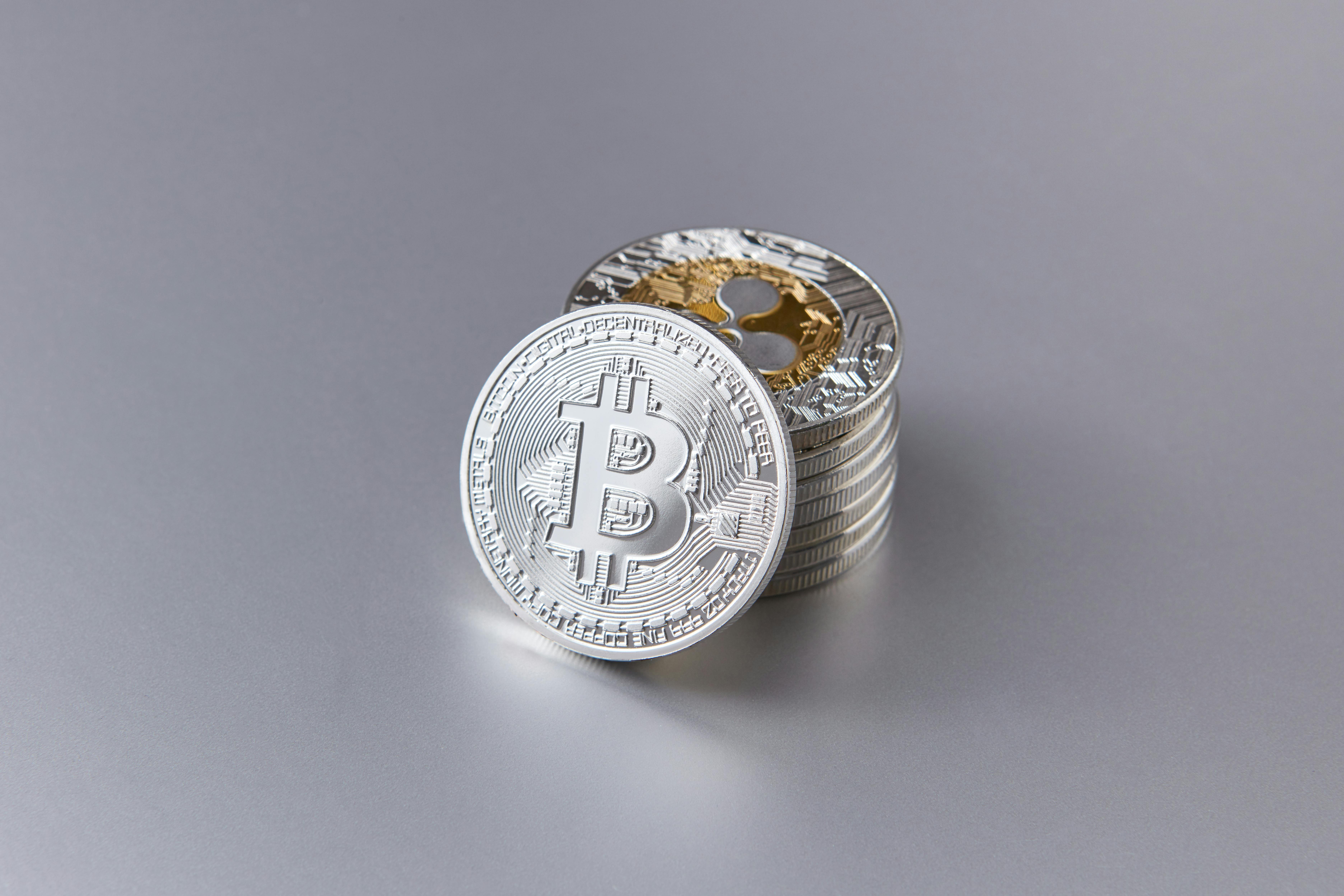
In 2026, the convergence of blockchain technology and traditional finance through Real-World Assets (RWAs) is reshaping investment landscapes. This article delves into the burgeoning RWA sector, identifying high-potential altcoins and platforms that offer unprecedented opportunities for yield, diversification, and wealth creation. Discover how tokenization is unlocking illiquid assets, attracting institutional capital, and why smart investors are moving into these money-generating crypto assets now.
Introduction to the Topic
Welcome to 2026, where the digital frontier of finance is no longer just about speculative cryptocurrencies or abstract DeFi protocols. The most profound revolution unfolding today is the tokenization of Real-World Assets (RWAs). Imagine owning a fraction of a luxury property, participating in a private credit pool, or earning yield from government bonds – all securely and transparently on the blockchain. This isn't a futuristic dream; it's the present reality, and it's poised to unlock trillions in value, fundamentally transforming how we invest, manage, and transfer assets globally.
At gocryptotrends.com, we've been tracking this seismic shift, and the data is clear: RWAs are not just a trend; they are the bridge between the multi-trillion-dollar traditional finance (TradFi) world and the agile, innovative realm of decentralized finance (DeFi). By tokenizing assets like real estate, commodities, private credit, intellectual property, and even fine art, blockchain technology is democratizing access, enhancing liquidity, and reducing the friction inherent in conventional financial systems. For the savvy investor looking beyond mere digital currencies, RWAs represent a mature, tangible, and high-growth investment category that demands your attention. This article will guide you through the leading altcoins and platforms that are spearheading this revolution, offering unparalleled opportunities to diversify your portfolio and generate significant returns in the years to come.
Backgrounds & Facts
The concept of asset tokenization isn't entirely new, with early experiments dating back to the late 2010s. However, it's in the mid-2020s that the technological infrastructure, regulatory clarity, and market maturity have converged to propel RWAs into the mainstream. The underlying technology – smart contracts on robust, scalable blockchains like Ethereum, Polygon, Avalanche, and Solana – allows for the immutable recording of ownership, automated distribution of dividends, and seamless transfer of tokenized assets. This digital wrapper around a physical or intangible asset confers unprecedented transparency and efficiency.
By 2026, the market for tokenized RWAs has grown exponentially. According to recent reports from institutions like BCG and BlackRock, the total value of tokenized real-world assets is projected to reach several trillion dollars by the end of the decade. This growth is fueled by several key factors:
- Enhanced Liquidity: Traditionally illiquid assets, such as real estate or private equity, become fractionalized and tradable 24/7 on global secondary markets.
- Reduced Costs and Friction: Eliminating intermediaries, legal complexities, and lengthy settlement periods drastically cuts down transaction costs and time.
- Fractional Ownership: Investors can own a small share of high-value assets that were previously inaccessible, democratizing investment opportunities.
- Global Accessibility: Blockchain-based assets transcend geographical boundaries, allowing investors from anywhere in the world to participate.
- Transparency and Auditability: Every transaction is recorded on a public ledger, offering unparalleled transparency and simplifying audits.
- New Yield Opportunities: RWAs bring stable, predictable yields from real-world cash flows into the DeFi ecosystem, offering attractive alternatives to volatile crypto-native yields.
The types of RWAs being tokenized are vast and growing. We're seeing everything from tokenized U.S. Treasury bills and corporate bonds providing stable yield to fractionalized real estate properties, fine art, luxury goods, and even carbon credits. Private credit, a multi-trillion-dollar market, is also being revolutionized, connecting DeFi capital pools directly with businesses seeking financing. Major financial players, including BlackRock, JPMorgan, and Fidelity, are not just observing but actively participating, launching their own tokenized funds and exploring blockchain-based settlement systems. This institutional validation signals a profound shift, indicating that RWAs are not a niche experiment but a foundational pillar of the future global financial system.
Expert Opinion / Analysis
The consensus among leading financial analysts and blockchain experts in 2026 is that Real-World Assets are the single most significant catalyst for mainstream crypto adoption and the ultimate convergence of TradFi and DeFi. "RWAs are the killer app for blockchain that institutions have been waiting for," states Dr. Lena Petrova, a senior analyst at Quantum Insights. "They offer the regulatory compliance and tangible backing that traditional investors demand, combined with the efficiency and innovation of decentralized technology. We're seeing smart money flow into this sector at an unprecedented rate."
One of the key challenges initially faced by the RWA sector was regulatory uncertainty. However, by 2026, many jurisdictions globally have established clearer frameworks for tokenized securities and digital assets, fostering a more secure environment for both issuers and investors. "The regulatory landscape, while still evolving, has matured significantly," comments David Chen, CEO of Tokenized Assets Group. "This clarity, coupled with advancements in oracle technology for reliable off-chain data feeds and robust legal structures for asset custodianship, has de-risked RWA investments considerably."
Furthermore, the interoperability narrative, which was a nascent concept a few years ago, has become a cornerstone of RWA expansion. Cross-chain bridges and multi-chain protocols are making it easier for tokenized assets to move between different blockchain ecosystems, enhancing liquidity and market reach. Analysts also highlight the role of AI in optimizing RWA platforms, from automated due diligence and risk assessment to personalized investment recommendations, further streamlining the investment process.
The long-term outlook is overwhelmingly positive. Experts predict that the institutional adoption of RWAs will continue to accelerate, driving significant capital into the sector. We're moving towards a hybrid financial system where traditional assets are increasingly represented and managed on blockchain rails, offering a powerful blend of security, efficiency, and accessibility. For retail investors, this means unprecedented access to asset classes previously reserved for the ultra-wealthy, combined with the potential for competitive, stable yields that can significantly outperform traditional savings instruments.
💰 Best Options in Comparison (VERY IMPORTANT)
For investors looking to capitalize on the RWA boom, choosing the right platforms and associated altcoins is crucial. Here are some of the leading players that are not only foundational to the RWA ecosystem but also offer compelling investment opportunities in 2026:
- Ondo Finance (ONDO): Ondo Finance is a leading protocol bringing institutional-grade financial products to the blockchain. Its flagship offerings include tokenized U.S. Treasury bills (OUSG) and money market funds (OMMF), providing DeFi users with access to stable, yield-bearing traditional assets. ONDO token holders participate in governance and benefit from the protocol's growing ecosystem. It's a prime choice for investors seeking exposure to government-backed yields within DeFi.
- Centrifuge (CFG): A pioneer in decentralized asset financing, Centrifuge connects DeFi liquidity with real-world assets, primarily through private credit and invoices. Businesses can tokenize their real-world assets into Non-Fungible Tokens (NFTs) and use them as collateral to borrow against on Centrifuge's Tinlake pools. CFG tokens are used for governance, staking, and securing the network, offering a direct play on the growth of on-chain private credit.
- MakerDAO (MKR): While not exclusively an RWA project, MakerDAO, the creator of the decentralized stablecoin DAI, has significantly embraced RWAs as collateral to back DAI. This strategic move strengthens DAI's stability and provides a crucial bridge for traditional assets into the wider DeFi ecosystem. Investing in MKR offers exposure to a foundational DeFi protocol that is increasingly leveraging RWAs for stability and growth.
- Maple Finance (MPL): Maple Finance is an institutional capital marketplace that facilitates uncollateralized loans to crypto-native and real-world institutions. It connects professional lenders with creditworthy borrowers, bringing transparency and efficiency to a previously opaque market. MPL tokens are used for governance, staking to provide insurance against defaults, and participating in the protocol's economic activity, making it an attractive option for those interested in institutional DeFi lending and credit markets.
To help you make an informed decision, here’s a comparative table:
| Project/Token | Primary RWA Focus | Target Audience | Yield Potential / Investment Case | Key Differentiator |
|---|---|---|---|---|
| Ondo Finance (ONDO) | Tokenized US Treasuries, Money Market Funds | Institutional & Retail (seeking stable TradFi yields) | Stable, government-backed yields; ONDO token for governance & ecosystem growth. | Direct access to high-quality, liquid traditional financial products on-chain. Strong institutional appeal. |
| Centrifuge (CFG) | Private Credit, Invoices, Supply Chain Finance | DeFi investors seeking higher yields from real-world business loans; Businesses seeking capital. | Variable, higher yields from real-world private debt; CFG token for governance, staking & network security. | Pioneering platform for tokenizing illiquid business assets into NFTs for collateralized borrowing. |
| MakerDAO (MKR) | Diverse RWAs (e.g., US Treasuries, commercial real estate) as DAI collateral. | DAI users, MKR holders, DeFi ecosystem participants. | Exposure to the stability and growth of DAI, backed by RWAs; MKR for governance and protocol fee burning. | Foundational DeFi protocol leveraging RWAs to enhance stablecoin stability and generate revenue. |
| Maple Finance (MPL) | Institutional Lending, Credit Pools for Businesses | Professional lenders, institutions, MPL stakers (providing insurance). | Yields from institutional credit; MPL token for governance, staking (insurance), and protocol fees. | Specialized in connecting institutional capital with creditworthy borrowers through transparent, on-chain pools. |
When considering these options, remember that each carries its own risk profile. Ondo Finance offers lower risk with government-backed assets, while Centrifuge and Maple Finance expose investors to credit risk inherent in private lending, albeit with robust due diligence processes. MakerDAO offers exposure to the broader DeFi ecosystem's stability. Diversification across these different RWA segments is often the wisest strategy.
Outlook & Trends
The trajectory for Real-World Assets in 2026 and beyond is nothing short of revolutionary. Several key trends are expected to define this space:
- Regulatory Harmonization: We anticipate further global regulatory clarity and harmonization, making cross-border RWA transactions smoother and attracting more institutional players. This will likely involve a push for global standards for digital asset classifications and ownership.
- Expansion of Asset Classes: Beyond existing categories, expect to see the tokenization of increasingly diverse and novel assets. This could include intellectual property rights, carbon credits, renewable energy project financing, private equity stakes, and even individual future earnings.
- Interoperability and Cross-Chain Solutions: As the RWA market grows, the need for seamless transfer and management of tokenized assets across different blockchains will become paramount. Advanced cross-chain bridges and multi-chain protocols will be essential for liquidity and market efficiency.
- Hybrid Financial Models: The distinction between TradFi and DeFi will continue to blur. Traditional banks and asset managers will increasingly launch their own tokenized products on both public and permissioned blockchains, creating a hybrid financial ecosystem. This will attract massive capital flows from legacy systems into the digital asset space.
- AI-Driven RWA Management: Artificial intelligence will play an even greater role in RWA platforms, from automating compliance checks and risk assessments to optimizing asset allocation and providing personalized investment advice. This will enhance efficiency and reduce operational costs.
- Emergence of RWA-Specific Blockchains: While existing chains are vital, we may see the development of specialized blockchains or Layer 2 solutions optimized specifically for RWA tokenization, offering enhanced security, privacy, and regulatory features tailored to institutional requirements.
- Decentralized Identity (DID) Integration: To facilitate compliant KYC/AML processes for regulated RWAs, the integration of Decentralized Identity solutions will become more sophisticated, allowing for privacy-preserving yet verifiable investor identification.
These trends collectively point towards a future where almost any valuable asset can be tokenized, providing unprecedented access, liquidity, and efficiency. The RWA sector is not just an evolution; it's a fundamental reimagining of global finance.
Conclusion
The year 2026 marks a pivotal moment in the evolution of digital finance, with Real-World Assets standing at the forefront of innovation and investment opportunity. The tokenization of tangible and intangible assets is not merely a technological advancement; it's a paradigm shift that democratizes access to wealth, enhances market efficiency, and bridges the historical chasm between traditional finance and the decentralized economy. For savvy investors, the RWA sector offers a unique blend of stability, yield potential, and diversification that is hard to find in other crypto categories.
As we've explored, platforms like Ondo Finance, Centrifuge, MakerDAO, and Maple Finance are leading the charge, each offering distinct pathways to participate in this burgeoning market. Whether you're seeking stable, government-backed yields or higher returns from private credit, there's an RWA-focused altcoin or platform designed to meet your investment objectives. However, as with any investment, thorough due diligence and a clear understanding of the associated risks are paramount. The future of finance is tokenized, and the opportunities to build significant wealth in this new era are immense. Don't be left behind – explore the RWA revolution today and position your portfolio for exponential growth. Visit gocryptotrends.com for the latest insights and expert analysis to guide your investment journey.