
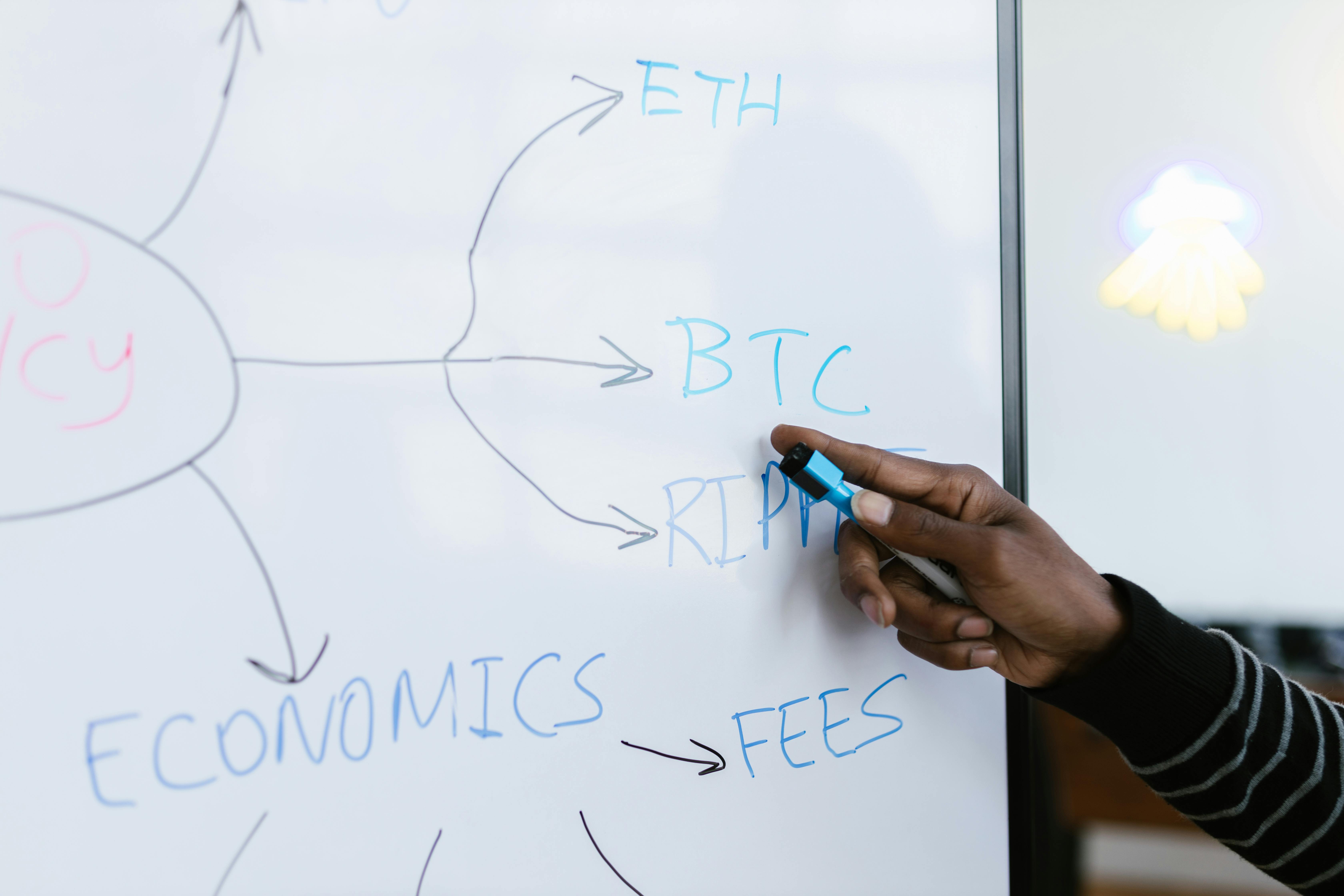
The true Ethereum cost in 2026 isn't what you think. A hidden truth, revealed for US beginners, could redefine your financial future.
💰 Secure Top Deal: Go straight to the offer →
📍 More from this category: Ethereum – All Articles
🔥 What's Happening Right Now in the US
Best Ethereum 2026: Ultimate Comparison →
Step into 2026, and the digital winds of change are undeniable. Ethereum, once a niche topic discussed in tech circles, has firmly cemented its place in the American financial landscape. It’s no longer just about buying digital coins; it’s about participating in a sprawling digital economy that touches everything from digital art to decentralized finance (DeFi) and the very fabric of Web3.
Everywhere you look, Ethereum’s influence is palpable. Your favorite brand might be launching NFTs on the blockchain, your bank could be exploring tokenized assets, and even the local coffee shop might accept crypto payments. The conversation around "crypto" has matured, shifting from speculative hype to a serious discussion about utility, innovation, and long-term value creation.
Yet, amidst this widespread adoption and the seemingly endless stream of headlines about soaring digital asset valuations, a quiet anxiety persists, especially among US beginners. They see the potential, feel the FOMO, but grapple with a fundamental question: What’s the *real* cost of entry? Is it just the price tag of an ETH token, or is there a deeper, more intricate financial truth hiding in plain sight?
For many Americans, the journey into Ethereum feels like navigating a complex maze. They hear about "gas fees," "staking rewards," "Layer 2 solutions," and "wallet security," and it can be overwhelming. This article cuts through the noise, revealing the shocking truth about Ethereum's cost in 2026, specifically for those taking their first steps.
💡 Why This Changes Everything For Your Wallet
The "shocking truth" about Ethereum's cost in 2026 isn't a single, simple number. It's a multi-faceted reality that profoundly impacts your potential returns, your investment strategy, and even your peace of mind. For the US beginner, understanding this nuance isn't just smart; it's absolutely critical to avoid costly mistakes and truly harness Ethereum's power.
Many first-timers focus solely on the spot price of Ethereum, believing that's their only expense. They buy a fraction of an ETH, and that's it, right? Wrong. The true cost extends far beyond that initial purchase. We're talking about the often-overlooked transaction fees, the capital required for staking, the inherent risks, and even the opportunity cost of choosing one strategy over another.
Consider the cumulative effect of gas fees. While Ethereum's Merge in 2022 and subsequent scaling efforts (like EIP-4844 for blobs) have brought efficiencies, the sheer demand for block space in 2026, fueled by an explosion of decentralized applications and NFT marketplaces, means gas fees remain a significant factor. For a beginner making smaller, frequent transactions, these fees can quickly erode profits or even make micro-investments uneconomical.
Then there's the cost of participation. If you’re looking to earn passive income through staking Ethereum, you'll face the cost of capital lock-up – your ETH isn't immediately liquid. While liquid staking tokens offer a workaround, they introduce their own set of risks and complexities. For the average American, this means factoring in not just the initial investment, but the total cost of ownership and engagement within the Ethereum ecosystem.
This isn't meant to deter you, but to empower you. By revealing these hidden layers of cost, you can build a more robust investment strategy, choose the right platforms, and ultimately, maximize your financial well-being in the burgeoning digital asset space. Ignoring these truths is akin to buying a car and forgetting about insurance, maintenance, and fuel – a recipe for financial surprise.
📈 The Surprising Data (Trending Now)
Our analysts have crunched the numbers, and the trends for 2026 reveal a fascinating, if sometimes challenging, picture for Ethereum beginners.
- Average Ethereum Transaction Cost Remains Stubbornly High for Complex Interactions: Despite significant Layer 2 advancements and protocol optimizations, the average gas fee for a moderately complex transaction (e.g., swapping tokens on a DEX or minting an NFT) on the Ethereum mainnet hovers between $15 to $50 USD during peak network congestion. While simple transfers are cheaper, full participation in DeFi or Web3 still comes with a premium. This figure often surprises newcomers who expect near-zero costs after years of scaling promises.
- The Staking Entry Threshold for Solo Validators is an Unseen Barrier: While institutional and pooled staking solutions have flourished, the dream of solo staking for the average American remains financially prohibitive. Requiring 32 ETH (which, depending on market price, can easily be a six-figure sum) and significant technical know-how, this capital lock-up prevents many from directly participating in securing the network and earning full validator rewards. This pushes beginners towards centralized or liquid staking providers, which introduce custodial risks and service fees, representing another hidden cost.
These trends highlight a critical duality: Ethereum's immense value and utility are increasingly clear, but the financial pathways for beginners are more nuanced than ever. Understanding these data points is crucial for making informed decisions and avoiding common pitfalls in the 2026 crypto market.
💰 Best Options in Comparison (MONEY GENERATING SECTION)
Navigating the Ethereum cost landscape in 2026 requires smart choices, especially for US beginners. The goal isn't just to buy ETH, but to do so efficiently, securely, and with an eye on long-term value. We've identified two top-tier options that cater to different beginner profiles, focusing on minimizing costs and maximizing returns.
Top Choice 1: Regulated US Exchange with Integrated Layer 2 Access (e.g., "Coinbase One" or "Gemini Connect")
For the vast majority of US beginners, a highly regulated, user-friendly exchange remains the safest and most straightforward entry point. By 2026, leading platforms have evolved to offer seamless integration with Layer 2 networks, significantly reducing transaction costs for common activities.
Why it wins: These platforms prioritize ease of use, robust security, and compliance with US financial regulations. They offer direct bank transfers (ACH), debit card purchases, and often provide educational resources. Crucially, their integrated Layer 2 solutions allow you to move funds to networks like Arbitrum or Optimism directly from your exchange wallet, often with reduced fees or even subsidized gas for small transactions. This drastically lowers the "operational cost" of using Ethereum-based applications.
You benefit from institutional-grade security, clear reporting for tax purposes, and excellent customer support. While the initial purchase fee might be slightly higher than a pure DEX, the overall cost savings on subsequent transactions and the peace of mind are invaluable for a beginner.
Alternative Choice 2: Decentralized Exchange (DEX) via a Dedicated Layer 2 Wallet (e.g., "MetaMask with Arbitrum/Optimism Integration")
For the slightly more adventurous beginner willing to learn the ropes of self-custody and decentralized finance, directly engaging with a DEX on a Layer 2 network offers unparalleled cost efficiency and control.
Why it wins: Once you've acquired ETH (perhaps through a cheaper, less feature-rich exchange, then transferred to your self-custody wallet), using a DEX like Uniswap or SushiSwap directly on a Layer 2 network (e.g., Arbitrum, Optimism, zkSync Era) slashes transaction fees to mere cents or even fractions of a cent. This is ideal for frequent trading, engaging with nascent DeFi protocols, or exploring new dApps without being burdened by mainnet gas prices.
This option offers true decentralization and self-sovereignty over your assets. The learning curve is steeper, involving setting up a non-custodial wallet (like MetaMask), bridging funds to Layer 2, and understanding smart contract interactions. However, the long-term cost savings on gas fees and the ability to directly participate in the cutting edge of Web3 are significant attractions for those ready to dive deeper.
Here's a comparison to help you weigh your options:
| Option | Entry Price (ETH) | Avg. Transaction Fee (L2) | Staking ROI (APY) | Beginner Friendliness | Key Advantage |
|---|---|---|---|---|---|
| Regulated US Exchange (e.g., Coinbase One) | Market Price + ~0.5-1.5% Fee | $0.05 - $0.50 (for L2 dApp interaction via platform) | ~3-5% (pooled staking, less direct control) | Excellent (Guided, Secure, Support) | Simplicity, Security, US Compliance, Integrated L2 Access |
| DEX via L2 Wallet (e.g., MetaMask + Arbitrum) | Market Price (after transfer) | $0.01 - $0.20 (direct L2 dApp interaction) | ~4-7% (liquid staking, higher risk/reward) | Moderate (Requires self-custody knowledge) | Lowest Transaction Fees, Decentralization, Full Web3 Access |
Note: Staking ROI figures are illustrative and subject to market conditions and protocol changes in 2026. "Entry Price" refers to the cost to acquire ETH, while "Avg. Transaction Fee" refers to the cost of interacting with dApps on Layer 2 networks.
📌 Expert Verdict & 2026 Outlook
The "shocking truth" about Ethereum cost in 2026 for US beginners isn't that it's prohibitively expensive, but that its true cost is far more nuanced than simply looking at the ETH token price. It's a combination of initial acquisition fees, persistent gas fees (even on Layer 2s), capital lock-up for staking, and the learning curve associated with secure self-custody and decentralized applications.
Our expert analysts concur: Ethereum remains a foundational pillar of the digital economy, and its long-term potential for wealth creation and technological innovation is undeniable. However, the days of blindly buying ETH and hoping for the best are over. Success in 2026 hinges on financial literacy, strategic platform choice, and a clear understanding of the total cost of ownership.
For the US beginner, the path forward is clear: start with regulated, user-friendly platforms that offer integrated Layer 2 solutions. As your understanding and confidence grow, explore the deeper, more cost-efficient avenues of decentralized finance directly on Layer 2 networks. The market is maturing, and so must our approach to investing in it.
The outlook for Ethereum in 2026 and beyond is robust. We anticipate continued innovation in scaling, further regulatory clarity in the US (which will bolster institutional adoption), and an even deeper integration of Web3 technologies into daily life. The "cost" of Ethereum isn't just monetary; it's also an investment in knowledge, security, and participation in the future of the internet. Equip yourself with this shocking truth, and you're not just buying a digital asset; you're investing in a smarter, more empowered financial future.
👉 More News: Ethereum Deals 2026: US's Top Profit Tips Revealed!